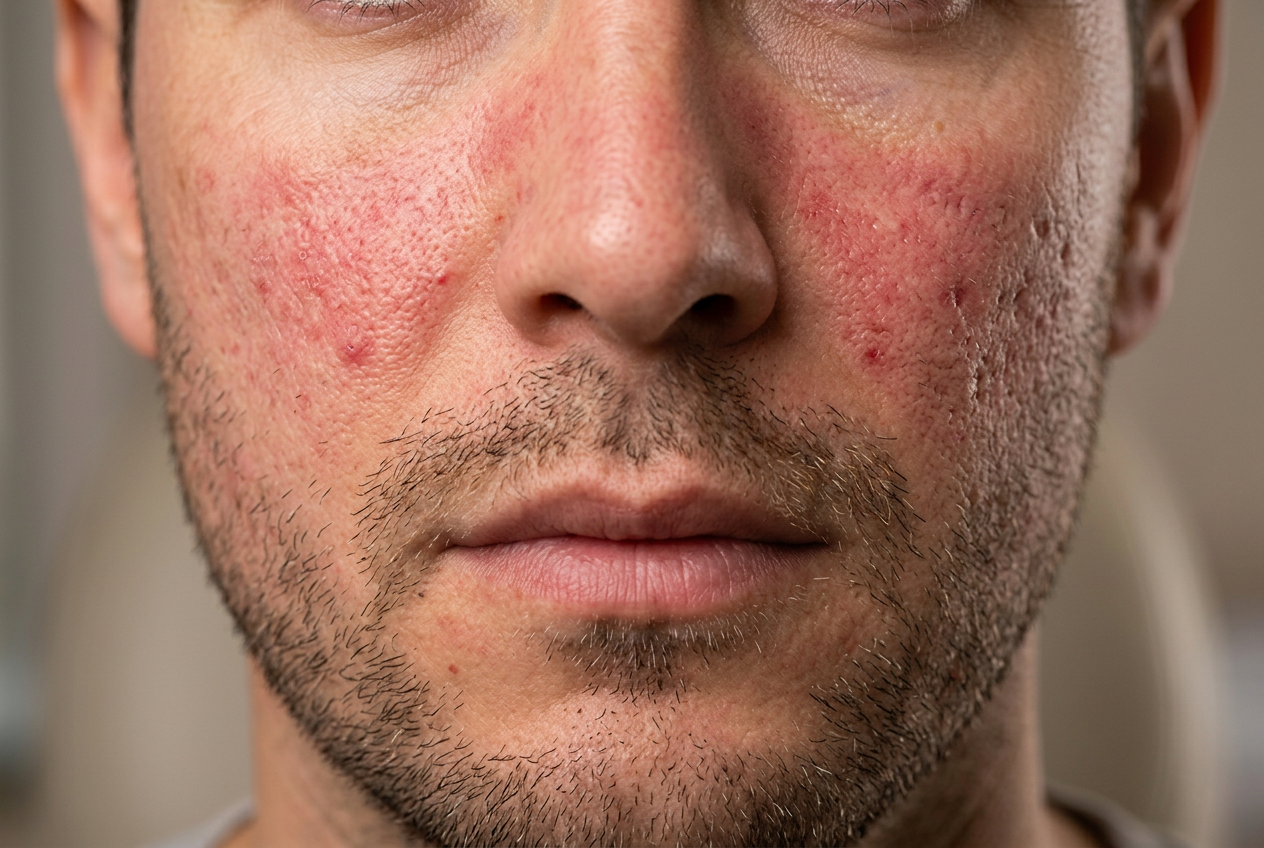
Breakouts that won’t quit. Redness that flares up without warning. Visible veins that no filter can hide. If any of this sounds familiar, you’re dealing with skin concerns that go deeper than surface-level, and they deserve more than a shelf full of drugstore products.
Acne and vascular conditions are two of the most misunderstood skin issues out there. People try product after product, often making things worse before they get better. The truth is, both conditions have real underlying causes — and addressing them properly starts with understanding what you’re actually dealing with.
What Acne Really Is (It’s More Complex Than You Think)
Acne isn’t just teenage skin. It affects adults well into their 30s, 40s, and beyond, and it comes in several forms — from blackheads and whiteheads to deeper, painful cysts that leave lasting marks.
At its core, acne develops when hair follicles become clogged with oil and dead skin cells. Bacteria then enter the picture, triggering inflammation. But the triggers that set this process in motion vary widely between people:
- Hormonal changes — particularly around menstruation, pregnancy, or stress
- Diet — some people find dairy or high-glycaemic foods worsen breakouts
- Skincare products — comedogenic (pore-clogging) formulas can fuel acne even when they’re marketed as gentle
- Environmental factors — pollution, humidity, and sweat all play a role
One of the most damaging consequences of acne isn’t the breakout itself — it’s what comes after. Post-inflammatory hyperpigmentation (dark spots left once a blemish heals) can linger for months, making the skin look uneven long after the active acne has cleared. This is where acne and pigmentation overlap, and why treating them often requires a joined-up approach.
Vascular Skin Concerns: When Redness Becomes a Pattern
Vascular skin concerns involve the blood vessels beneath the skin’s surface. When these vessels dilate, become damaged, or grow too close to the skin, they create visible redness, thread veins, or a flushed appearance that can feel impossible to conceal.
Common vascular concerns include:
- Thread veins (spider veins) — small, visible red or purple vessels, usually on the face or legs
- General facial redness — persistent redness that doesn’t come and go with temperature
- Vascular birthmarks or blemishes — present from birth or developed over time
- Rosacea-related flushing — while rosacea has its own characteristics, its visible redness is fundamentally vascular in nature
Unlike acne, vascular concerns aren’t caused by bacteria or blocked pores. They’re structural — which means no topical cream will make a spider vein disappear. This is a key reason why over-the-counter solutions consistently fall short.
Why Professional Assessment Changes Everything
Both acne and vascular concerns are often self-treated for years before someone seeks professional help. By that point, patterns have set in, the skin may be sensitised from repeated trial-and-error, and underlying triggers have gone unaddressed.
A professional can look beyond what’s visible on the surface and identify what’s actually driving your skin’s behaviour. They can also distinguish between conditions that look similar but need different approaches — for example, separating hormonal acne from a vascular flush, or identifying whether redness is rosacea-related or tied to a separate vascular issue.
This kind of accurate diagnosis matters because using the wrong treatment doesn’t just fail to help — it can actively aggravate the skin.
How Light-Based Treatments May Help
Advanced light-based therapies have become a well-regarded professional option for both acne and vascular skin concerns. These treatments work by targeting specific structures within the skin — whether that’s bacteria contributing to active acne, excess pigmentation from post-breakout marks, or visible blood vessels close to the surface.
They’re not a one-size-fits-all cure. Results depend on skin type, the severity of the concern, and individual response to treatment. But for suitable candidates, they offer a more precise, considered approach than anything available in a pharmacy aisle.
The process typically begins with a thorough consultation — assessing your skin, your history, and your goals — before any treatment plan is recommended.
Take the Guesswork Out of Your Skincare
Whether you’ve been managing acne for years or you’ve noticed your skin becoming progressively redder and more reactive, getting a professional opinion is always the right move. You deserve answers that are specific to your skin, not generic advice lifted from a product label.
To find out more about professional light-based treatments for acne, vascular concerns, and related skin issues, visit advalight.co.uk — and take the first step toward skin that works with you, not against you.